

Earthquake Information
By frhayes | July 30, 2008
Message From the Chief
I am often asked two questions by residents of Long Beach when the topic of earthquakes is discussed. “Is there an earthquake danger in our City” and “What is being done to protect me if the big one hits?The answers to these questions contain both good and bad.
The bad news is we all have chosen to live in area that has been, and will continue to be, earthquake prone. The effect of the 1933 earthquake along the Newport Inglewood Fault that dissects our City was severe. One hundred and twenty residents died and there was major property damage. The possibility of a major earthquake along this and other faults in our general area is real.
The good news is our City’s emergency planning, building code enforcement, andour ability to rapidly respond emergency services to the community have matured greatly since the devastation of 1933. Your Long Beach Fire Department is a key player in all of these efforts. To deal with the threat of a major earthquake, we have established a Disaster Management Division whose sole responsibility it is to plan for disasters.
The men and women of the Long Beach Fire Department have major responsibilities before, during, and after a major event. For your protection, Long Beach Firefighters constantly train for readiness in major medical emergencies, extrication of trapped victims, and the possibility of large area fires, as experienced in San Francisco on multiple occasions after their historic quakes. We need your involvement in disaster preparedness and ask your active participation in the Community Emergency Response Team (CERT) program where you live.
Community Emergency Response Teams
Life safety is our number one priority, and to truly be successful, we really need your help. It is imperative for our community to become disaster trained and actively participate in planning for a major earthquake. We need you. Our Community Emergency Response Team (CERT) program is designed to help businesses and individuals prepare, through a series of classes taught by Long Beach Firefighters. Please call the CERT hotline, 24 hours a day, (562) 570-2525, for more information. We need you on our team.
Please make the time to read and act on the vital information we have prepared for you.
Thank you . . .
Before a Major Earthquake – Prepare & Plan
How well you, your family and your home survive an earthquake often depends upon how well you prepare beforehand. It is important to conduct earthquake preparedness training, with all family members, babysitters, and/or other household help, at least, every six months. The following checklist will help you get started.
Knowledge is power
- Learn the “SAFE SPOTS” in each room – under sturdy tables, desks, or against interior walls. These locations can be used as areas of refuge during a quake.
- Learn the “DANGER SPOTS” within a building – near windows, mirrors, hanging objects, fireplaces, and tall, unsecured furniture. These areas will most likely fail during an emergency.
- Learn how to shut off gas, water, and electricity in case the lines are damaged. Locate any necessary tools for these jobs near the meter and keep the area clear.
- Learn first aid and CPR (cardiopulmonary resuscitation).
- Know the location of the nearest fire and police station. These locations will become major sources of information in an emergency.
- Know how to operate your fire extinguisher(s).
Inspect Your Home
- Check chimneys, roofs, walls, and foundations for stability. Make sure your house is bolted to its foundation.
- Secure your water heater and major appliances as well as tall, heavy furniture, hanging plants, mirrors, and picture frames – especially those over beds.
- Keep breakables, heavy objects, flammable or hazardous liquids such as paints, pest sprays and cleaning products, in secured cabinets or on lower shelves.
- Keep exits clear at all times.
- Avoid excess storage.
- Store important documents in a safety deposit box or sturdy fireproof box. Make copies and store in a separate location.
- Take photos and/or videotapes of valuables. Store them in a site well away from your city. This form of documentation will help with insurance reimbursement.
- Place beds away from windows. At night, close blinds to prevent broken glass from flying into the room in the event of a quake.
Preparation
- Prepare an “EMERGENCY PREPAREDNESS KIT” of essential supplies. You must be prepared to exist on your own for at least 3 days. See the back of this brochure for more suggestions.
- Decide how and where your family will reunite if separated during a major quake.
- Choose an out-of-state friend or relative whom family members may call after the quake to report their whereabouts and conditions.
- If you have a child or children in school or daycare, know their earthquake policy. Make sure your emergency contact numbers at schools and/or daycare are current.
- Teach children how and when to call 9-1-1.
- Keep shoes, flashlight, and a whistle (for sounding alarm) by your bed at night.
VERY IMPORTANT – Organize your neighborhood to be self-sufficient after a quake. Community Emergency Response Teams (CERT) help tremendously. Call our CERT Hotline (562) 570-2525.
During an Earthquake
- Stay calm
- If indoors, stay there. Seek shelter at one of your “SAFE SPOTS.” Get under a desk or table, or stand in a corner. A major cause of quake-related injuries is falling debris. Stay inside until your exit path is safe from falling objects.
- If outdoors, get into an open area away from trees, buildings, walls, and power lines.
- If in a high-rise building, stay away from windows and outside walls. Get under a table. Do not use elevators.
- If driving, pull over to the side of the road and stop. Avoid overpasses and power lines. Stay inside your car until the shaking is over.
- If in a crowded public place, do not rush for the doors. Crouch and cover your head and neck with your hands and arms.
After a Major Earthquake
Number One Priority – Life Safety
- Check for injuries within your home and neighborhood.
- If there are trapped or injured victims call 9-1-1. Do not attempt to use the telephone for other than life-threatening emergencies. If telephones are out, try a cellular phone.
- Apply first aid and/or start CPR if necessary.
- Be prepared for aftershocks. These additional quakes may occur soon after and frequently.
- Stay out of damaged buildings.
- Inspect your home, If damage to your electrical system is suspected (frayed wires, sparks, or the smell of hot insulation), turn off electrical power at the main breaker or fuse box.
- Check for gas, water, and sewage leaks. If here is damage, turn the utility off at the source and immediately report gas leaks to your utility company.
- Check for downed power lines; warn others to stay away.
- Open doors to cupboards and closets carefully, Be wary of falling objects.
- Check your building for cracks and damage, including the roof, chimney, and foundation.
Other Items
- Turn on your portable radio for instructions and news reports. For your own safety, cooperate fully with public safety officials and follow instructions.
- Do not use your vehicle unless there is an emergency. Keep the streets clear for emergency equipment.
- If you evacuate your home, leave a written message on your door telling family members and others where you can be found. Advise remaining neighbors.
- Be careful around pets, they have been traumatized. Normally quiet and friendly cats and dogs may become aggressive or defensive. Leash dogs and place them in a fenced yard.
- Eat refrigerated and frozen food first.
Emergency Preperadness Kits
We all need to be totally self-sufficient for at least 72 hours after a major earthquake. Utility service will most likely be interrupted, and public safety services, such as police and fire departments, will be busy handling serious crises. To cope with this situation, YOU must have vital supplies stored to sustain you through this initial three-day period (minimum). Be sure to include:
- Food – Canned or dehydrated. Remember a can opener, cooking and eating utensils.
- Water — One gallon per day (per person) minimum — store in airtight containers and replace every six months. Emergency water may be obtained from water heaters, melted ice, toilet tanks, and canned vegetables. Use iodine tablets or chlorine bleach (8 drops per gallon) to purify water as needed.
- First aid kit – Extra bandaging supplies
- Fire extinguisher — Your fire extinguisher needs to be suitable for all types of fires (A, B, & C)
- Flashlights with extra batteries — Keep flashlights beside your bed and in several other locations. DO NOT use matches or candles after an earthquake until you are certain there are no gas leaks.
- Portable radio with extra batteries — Most telephones will be out of order or limited to emergency use. The radio will be your best source of information.
- Extra blankets or sleeping bag(s), clothing, shoes and money
- Alternate cooking sources — Store a barbecue or camping stove for outdoor camping. CAUTION: Be sure there are no gas leaks in the area before you use any kind of fire as a cooking source, and NEVER USE CHARCOAL INDOORS.
- Special items — Have at least a one-week supply of medications and food for infants and pets.
- Extra Eye Glasses and Shoes
- Sanitation Supplies – Toothpaste & brushes, soap, toilet paper, plastic trash bags for waste or ponchos, bleach, plastic trash can, dust mask, goggles, crowbar, garden hose, and sturdy bucket.
- Feminine hygiene supplies
- Cleanup & Safety Tools – Heavy gloves, shovel, knife, broom, axe, adjustable wrench, pliers, screwdriver, coil half-inch rope, and duct tape.
BE SURE YOUR EMERGENCY KITS ARE PORTABLE AND EASY TO REACH
Additional available links for which you and family, as well as businesses can become better prepared to respond to an earthquake.
Local:
City of Long Beach Resources
Fire Department – Disaster Management Bureau http://www.longbeach.gov/fire/emergency_prep/default.asp
Community Emergency Response Team (CERT)http://www.longbeach.gov/fire/cert/mission_and_purpose.asp
Police Department http://www.longbeach.gov/police/default.asp
Department of Health & Human Services http://www.longbeach.gov/health/default.asp
The American Red Cross – Greater Long Beach Chapterhttp://www.redcrosslb.org/
County:
The Los Angeles County Chief Executive Office – Office of Emergency Management http://www.lacoa.org/
State:
The Governor’s Office of Emergency Services http://www.oes.ca.gov/
Federal:
A great resource to help develop your earthquake plans and kits. – Ready America Campaignhttp://www.ready.gov/america/beinformed/earthquakes.html
Disaster Help – Federal Emergency Management Agencyhttp://www.disasterhelp.gov/start.shtm
Federal Emergency Management Agencyhttp://www.fema.gov/
Department of Homeland Security http://www.dhs.gov/index.shtm
U.S. Geological Survey – Specific earthquake information and maps. http://www.usgs.gov/
Topics: Public Safety | 26 Comments »
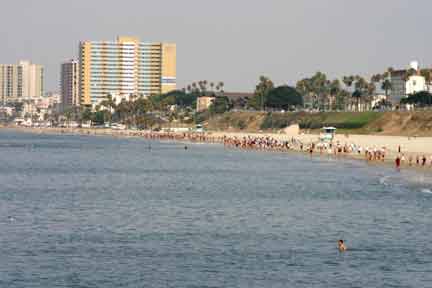
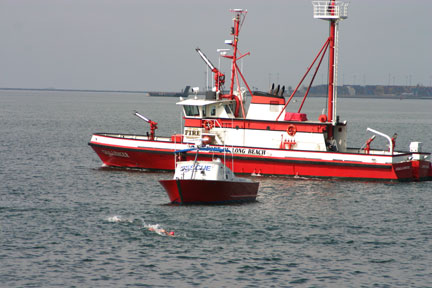
Long Beach Junior Lifeguard Stud Ironman
By miduree | July 29, 2008
Topics: Events | 31 Comments »
Long Beach Fire Station 20 Profiled in the Press Telegram
By frhayes | July 29, 2008
LONG BEACH – For the firefighters of Station 20 in the Port of Long Beach, just showing up for work can be hazardous.
Their station house – a series of “temporary” bungalows erected in 1985 – sits below the crumbling Gerald Desmond Bridge, a monstrous span so decrepit that engineers were forced to place giant nets underneath it to catch chunks of concrete routinely chipping off its underbelly.
Oftentimes the bridge pieces, weighing up to several pounds each, fall harmlessly on Station 20’s roof or driveway, or on Pier D Street nearby.
But they’ve also smashed through the windshield of a firefighter’s parked car and slammed into the station’s detached workshop.
But that’s only a slice of the excitement.
Situated
 on the northwest tip of Pier D, the small station is surrounded by some of the heaviest industry in America.
Within a half-mile are chemical tank farms, oil refineries, metal recyclers, a massive lumber yard, a power plant and several sprawling container terminals.
Supplying these facilities are a few of the world’s largest ships – man-made
behemoths stretching up to 1,200-feet and capable of sailing into just a few of the globe’s biggest seaports.
The hazards posed by these technological marvels are innumerable and real. Imagine, for example, a 120,000-barrel petroleum tanker bursting into flames in the harbor.
The four-member crew from Station 20 would likely be among the first on scene.
“These guys belong to a select group of firefighters anywhere in the world who live on the water and are trained for this kind of responsibility,” said Long Beach Fire Capt. Mike DuRee during a recent visit to the site. “Things like water rescue, dive operations, HazMat, (ocean) vessel fires. Chemical fires can be extremely difficult and dangerous … it’s not an easy job.”
Captain Mike Dollar, the firehouse boss, says his crew feels at home among the tank farms, mega-ships and multi-hued

Fire department engineer Steve Parker discusses the Liberty’s power system in the engine room.
(Scott Smeltzer / Staff Photographer)containers.
“It’s a different atmosphere here on the water and because of that, you approach your work a little differently,” Dollar said. “We all share that bond.”
Part of the challenge firefighters face on boats is limited resources. Although they have backing from Long Beach Lifeguards, Long Beach Fire Station 15 (also in the port) and the neighboring city of Los Angeles Fire Department, resources are scarce, DuRee said.
“You really don’t have that ability on the water to call in unlimited (backup),” Dollar said. “From the water side of it, you have to rely on your (fellow) firefighters) and all the other agencies down here to get things done.”
While they have a full-size fire engine, the jewel of Station 20’s operation is Liberty, an 88-foot, red-and-white fireboat capable of pumping 10,000 gallons of water a minute through its four deck pumps.
The Liberty, which the crew maintains on their own with routine checkups and daily tests, is a firefighting monster in its own right.
Powered by three massive engines, the boat hosts a sonar probe, hazardous materials decontamination station, sleeping quarters and a foam pump used to put down fires on the water.
Firefighter Fred Knaub, the boat driver, says the vessel has been used fighting blazes from Malibu to southern Orange County.
“It’s like a self-contained fire (station),” Knaub said. “We could live on here for a week straight. In fact, some of the guys almost did fighting the Catalina Island fire (in 2007).”
While most days are spent responding to medical emergencies, working on the boat or fighting small flash fires, the crew gets called to assist Homeland Security in fighting terrorism and drug trafficking.
Oftentimes, responders are assisted by Long Beach Lifeguard divers Don Johnson and Cameron Abel, who help when searching for bodies, explosives or illegal contraband stashed under piers or water vessels.
The lifeguards, who drive a smaller, faster boat, are also often used to scout incidents and report back to the larger fireboat.
“They’re our ‘bird dogs,’ and we couldn’t perform our job without them,” DuRee said. “In many ways, they’re the eyes and ears of the fire stations in the harbor.”
In the near future, Station 20’s inhabitants may find themselves with a new home – courtesy of the city’s Harbor Department, which is considering upgrading or replacing the existing structure on Pier D Street.
Port of Long Beach spokesman Art Wong says that if the project is given the green light in coming months, construction could begin sometime in 2010.
The firehouse’s current tenants, however, aren’t complaining about their living space.
“We all feel pretty fortunate to be here,” said Firefighter Rudy Gonzales. “This is kind of a special honor to be down in the port. It takes a certain kind of firefighter to be comfortable on the water doing this.”
kristopher.hanson@presstelegram.com, 562-499-1466
Topics: News | 36 Comments »
Northern California Brush Fire Deployment
By frhayes | July 23, 2008
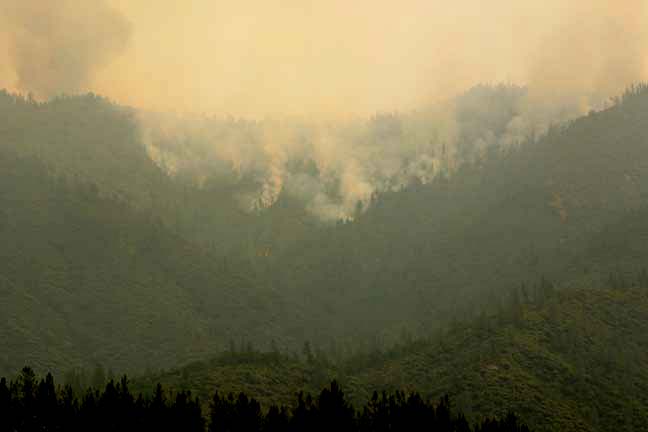
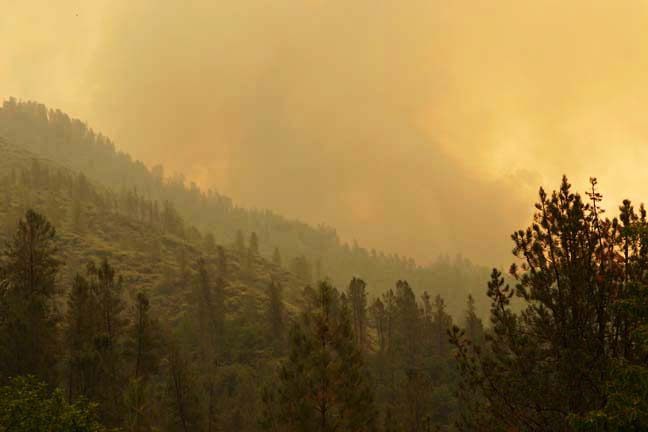
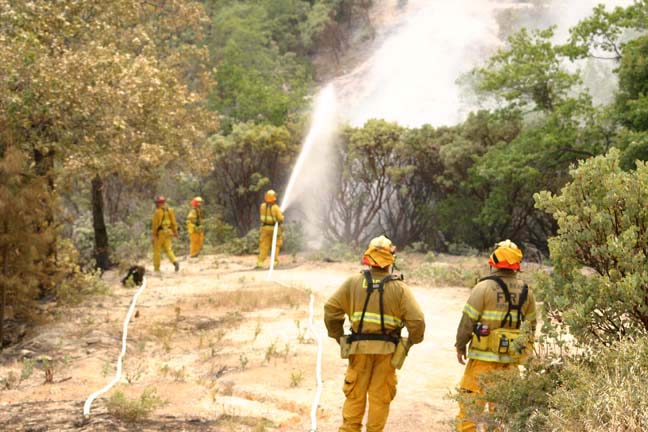
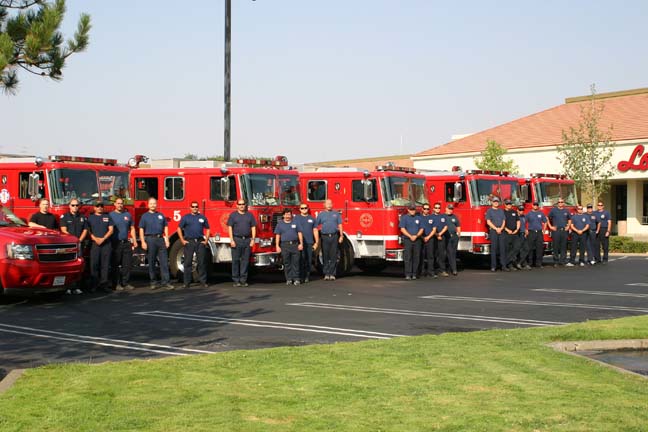
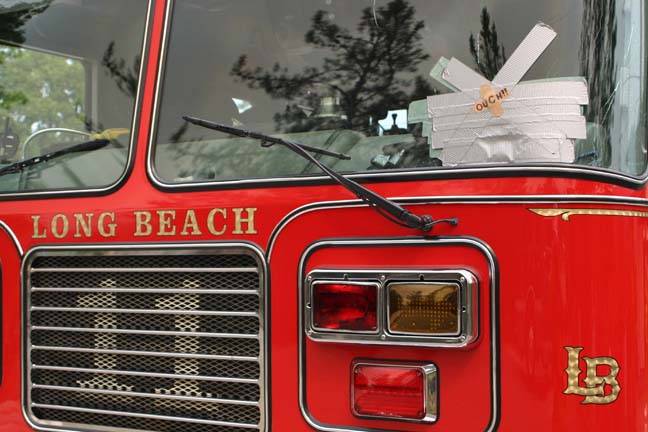
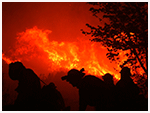
Beginning in early June, Northern California had over 150 fires caused by lightning strikes and other means burning in numerous wild land areas. This situation caused a lack of Firefighters and equipment in which to extinguish these fires and protect threatened homes.
On a request from the Office of Emergency Services (OES) a Long Beach Fire Department (LBFD) Strike Team (Five Engine Companies and a Battalion Chief) was dispatched on July 10th, at 8:00 A.M. to travel the approximate 600 miles to Shasta County in Northern California to assist with firefighting operations. The strike team was assigned to the Motion and Iron Mountain Complex incidents throughout the eleven-day deployment, making this assignment one of the longest and furthest traveled deployments in the LBFD history.
During operations the strike team was primarily used for “Structure Protection” on houses that were built in heavily wooded areas. The multiple fires that had been started by lightning strikes and from “back firing” operations, served to form a large fire front that at numerous times threatened these homes.
On many of the days that fire crews operated temperatures reached over 110 degrees with virtually no wind, causing the smoke to congregate in low lying areas making it difficult to breath at times. The yellow nomex brush gear that was worn by firefighters for protection served to raise the bodies temperature causing concern for heat related illnesses such as; heat cramps, exhaustion, or stroke. Members took proactive measures to avoid these conditions by staying hydrated, seeking shade when possible, and rotating tasks that were strenuous in nature.
There were many lessons learned from this experience from all the members who were on this assignment, specifically how to manage and integrate into a large incident, and how this could be accomplished if required in the city of Long Beach. All of the Northern California Fire Department members and other individuals involved with fighting these fires were greatly appreciative of our participation in this campaign. During many of the early morning briefings before the strike team was assigned it was stressed that this was already one of the busiest fire seasons on record and that conditions were in place (hot weather and dry fuels) to make future requests for strike teams throughout all of California a real possibility. In fact historically speaking most of the Southern California brush fires start in mid to late Summer, and into early Fall.
Based on this information it is quit possible that the LBFD will be sending out strike teams to assist communities in both Northern and Southern California who become overwhelmed by brush fires that they are unable to handle on their own.
Topics: Incidents | 25 Comments »
Arson Suspects Arrested
By frhayes | July 23, 2008
This article written by Tracy Manzer of the Press Telegram appeared on June 15, 2008. For the complete story and a video of the arrest click on to the link provided below.
LONG BEACH – Surveillance video and bragging rights led to the arrest early Tuesday of two Long Beach men in connection with one of the most aggressive arson cases to plague Long Beach in recent memory.
Caldrin Benitez and Juan Alvarez, both 22, emerged bleary eyed from their West Long Beach homes as West Division patrol officers dressed in riot gear banged on their doors at about 6:30 a.m. to serve arrest and search warrants.
Both are suspected of setting 24 fires in their neighborhood over a period of about four days in June and early July, said Arson Investigator Richard Birdsall, a Long Beach Police detective assigned to the fire department’s Arson Detail.
Most of the fires set at or near homes or businesses in an area bordered roughly by 31st Street, Adriatic Avenue, Spring Street and Santa Fe Avenue, authorities said.
Topics: News | 25 Comments »